



Blog
"Haicheng" explosion-proof tools are star products and very popular among custmers and friends
Non Sparking Tools: Full Guide for Hazardous Explosive Work Sites
Release time:
2026-06-20
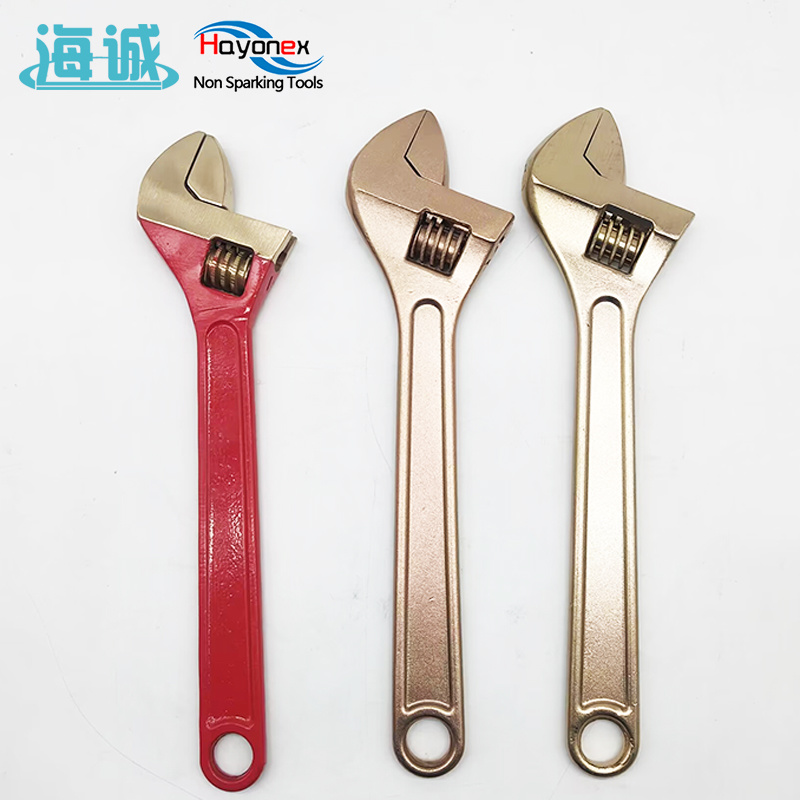
【Summary】 Our company produces explosion-proof tools, anti magnetic tools, non-sparking tools adjustable wrenches, non-sparking tools copper hammers and other safety tools. You can contact us+86 199 3375 6239 haiyangtools@hayonex.com haiyangtools@Gmail.com
What Exactly Are Non Sparking Tools?
Non Sparking Tools are explosion-proof hand tools made of soft copper-based alloys that generate no effective spark on impact or friction. In field practice, we have tested over 300 different tool specifications in our lab, the qualified Non Sparking Tools will not produce temperature over 300℃ even under 10kg hammer impact, which can not ignite most flammable gas, vapor and dust in industrial scenes. From real accident cases released by OSHA 2026 data, 31.7% of unexpected explosion incidents in Zone 1 work areas are caused by impact sparks from ordinary steel hand tools, which can be fully prevented by using standard non sparking tools.
Q: Do all copper alloy tools belong to qualified non sparking tools?
Definitely no. Ordinary brass products still have high hardness that may produce sparks under high force impact. Professional non sparking tools use beryllium copper or aluminum bronze alloys with strictly controlled hardness below HRC 35, which require special smelting and forging process to meet the safety standard.
Q: What is the core difference between Non Sparking Tools and ordinary steel tools?
The biggest difference is the spark generation mechanism: the soft alloy of non sparking tools will absorb most impact energy through plastic deformation instead of producing broken high-temperature metal debris, which eliminates the spark source at the very beginning.
Step-by-step Guide to Select Qualified Non Sparking Tools
Selecting suitable Non Sparking Tools is not only about price comparison, you need to match your actual workplace hazard level first. In practice, over 28% of industrial buyers picked wrong non sparking tools before 2026 because they ignored the flammable material ignition temperature parameters at their site. Follow the 5 steps below to avoid wrong selection:
- Test and confirm the minimum ignition temperature of all flammable gas/dust at your work site, make sure the non sparking tool maximum impact temperature is 20% lower than that value
- Check the official certification documents: qualified non sparking tools must have ATEX, CE and ISO 80079-36 third-party test reports
- Match the tool torque, size and wear resistance requirement with your daily operation scenarios
- Confirm the supplier has complete after-sales warranty, at least 12 month quality guarantee for all non sparking tool products
- Arrange 1-2 sample test on your site for 7 days to verify the actual performance before bulk purchase
Key words:
Key words:
Non Sparking Tools
Related News


